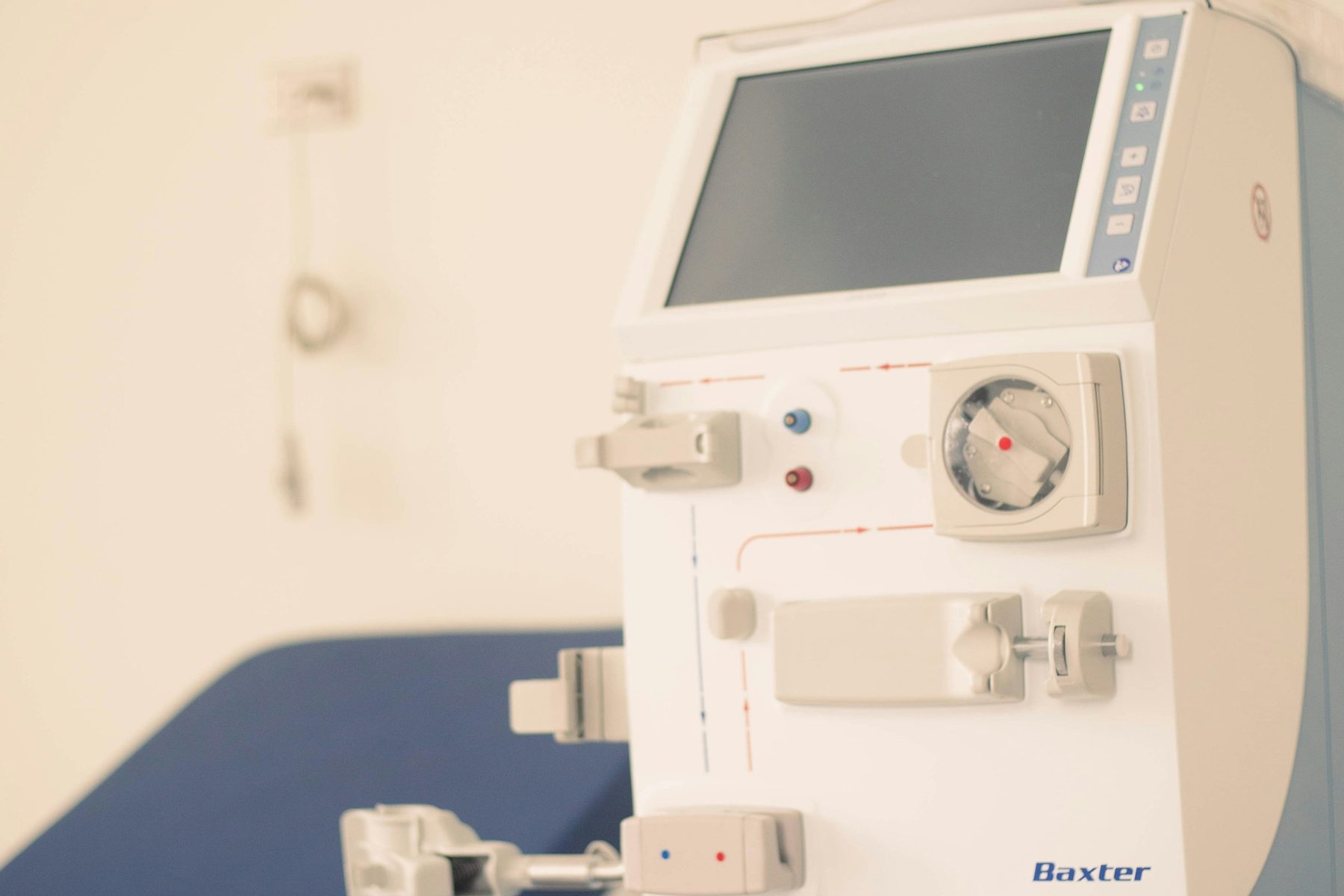
A high-risk renal clinic and haemodialysis programme, serving patients across Uganda.
Screening in the community, specialist nephrology care in the clinic, and dialysis sustained for as long as a patient needs it — with the cost carried, in part, by people who will never meet them.
The kidneys stop clearing the blood. Nothing else takes over.
Healthy kidneys filter waste and excess fluid out of the blood continuously, day and night. When they fail, that waste and fluid stay in the body. Within days a patient becomes breathless, swollen and confused; the chemistry of the blood moves far enough out of range to stop the heart.
Haemodialysis does the filtering artificially. A patient's blood is circulated through a machine, cleaned, and returned. It works — and it works only for as long as it is repeated. A session is not a cure. It buys days, and then the fluid and the waste begin to build again.
That is why this programme is relentless by nature. A patient with end-stage kidney disease needs treatment several times every week, for the rest of their life or until a transplant. The clinical question is answered. The question that decides whether they live is whether the next session can be paid for.

Five services, delivered by the renal team.
The programme covers the whole arc of kidney care, from the sudden crisis that can be fully reversed to the chronic disease that has to be managed for life.
Acute kidney injury management
A sudden loss of kidney function — after severe infection, dehydration, obstruction, complications in pregnancy or a toxic exposure. Treated quickly, kidney function can return completely. Treated late, or not at all, it does not.
Chronic kidney disease management
The slow loss of function that most often follows years of diabetes or high blood pressure. Managed early, its progress can be slowed considerably. This is where screening pays for itself many times over.
Haemodialysis
Machine filtration of the blood for patients whose kidneys can no longer do it. Delivered as a repeating course of sessions, with the schedule set by the clinical team according to each patient's condition.
Nephrology consultations
Specialist assessment and review — establishing the cause, setting the treatment plan, adjusting medication and deciding when dialysis should begin. Available to referred patients and to those found through screening.
Tunnelled dialysis catheter placement
Reliable long-term vascular access, so that patients on a continuing course of dialysis are not repeatedly re-cannulated. This service will be offered as the programme expands.
Community screening
Chronic disease screening taken out to the surrounding community, so that kidney disease, diabetes and hypertension are found in people who feel well enough not to have sought a test.
From a screening table to a settled treatment schedule.
Five steps. Most patients who reach us late did not skip one of them — they simply never got to the first.
Screening
Blood pressure, blood sugar and kidney function checks, offered in the clinic and at community outreach events. The aim is to find disease in people who have no symptoms yet, because that is the group whose outcome can still be changed.
Diagnosis
Anyone whose results are abnormal is brought in for laboratory testing and a nephrology assessment, to establish whether this is an acute injury, early chronic disease, or kidney failure that has already advanced.
Treatment plan
The nephrology team sets the plan with the patient and their family: medication and monitoring where the disease can still be slowed, or preparation for dialysis where it cannot. Cost is discussed openly at this point, not later.
Dialysis sessions
For patients who need it, a repeating course of haemodialysis at the clinic. Sponsorship is applied to the sessions of patients who cannot meet the cost, so that the schedule the clinician set is the schedule the patient actually receives.
Follow-up
Review of blood results and dialysis adequacy, management of anaemia, blood pressure and nutrition, and adjustment of the plan as the patient's condition changes. Patients who stop attending are followed up, not written off.
Family support throughout
Kidney failure lands on a household, not only a person. Families are taught what the illness is, what the schedule requires of them, and what warning signs mean a patient must be brought in before the next appointment.
The cheapest dialysis session is the one a patient never needs.
Chronic kidney disease is silent for years. By the time it causes symptoms that send someone to a clinic, much of the damage is permanent. The most valuable thing this programme does is find the disease before that point — in people who feel perfectly well.
That is why the foundation supports a chronic disease screening programme for the community around the clinic, testing for the conditions that lead to kidney failure as well as for kidney function itself.
- Checks offered to people with no symptoms, not only to those who present unwell
- Particular attention to those living with diabetes or high blood pressure
- A clear route from an abnormal result into a nephrology assessment, so screening does not end in a leaflet
- Health education delivered alongside testing, in the language of the community

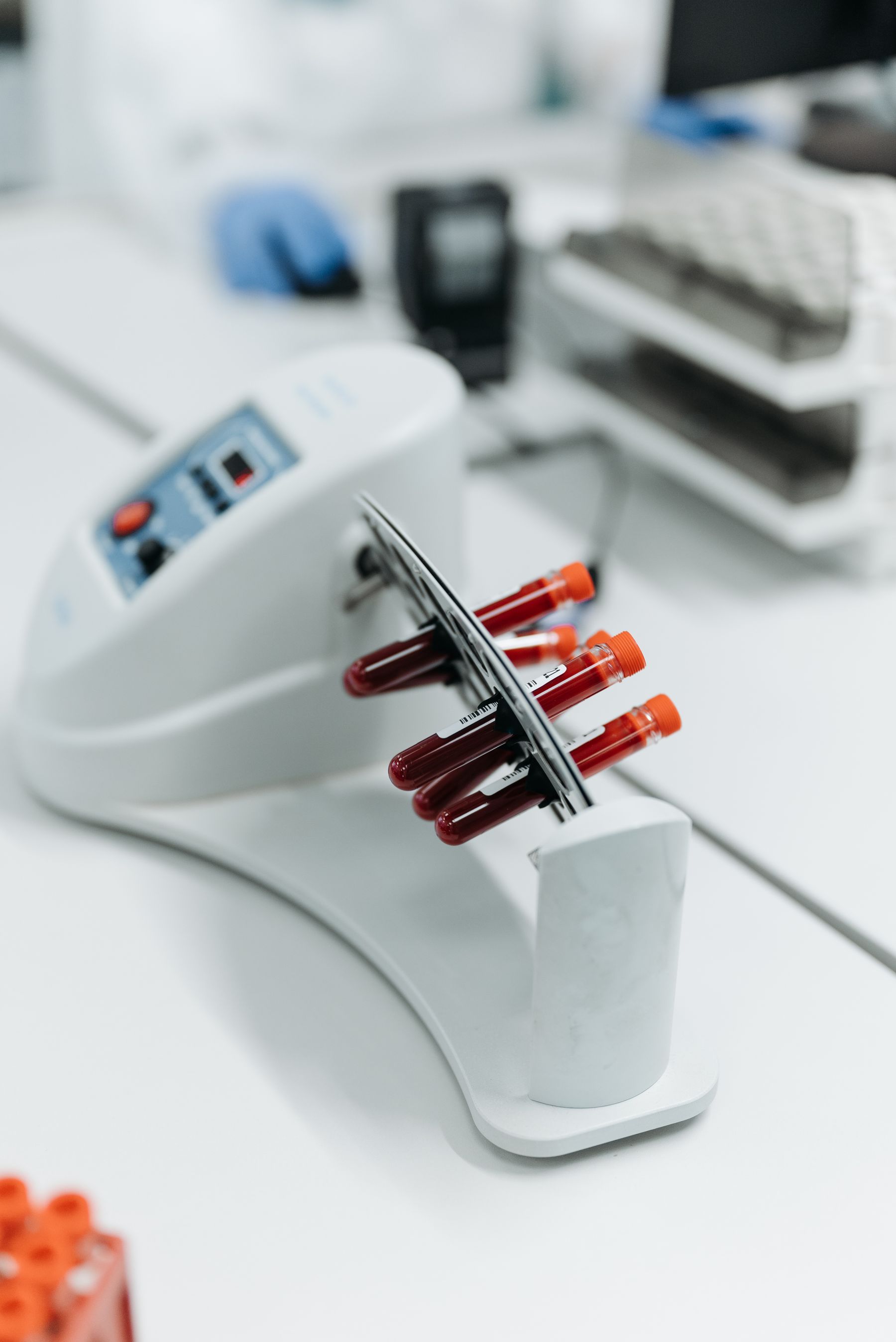
SAS Lweza Clinic, Seguku — licensed and operating since 2012.
Treatment is delivered at SAS Lweza Clinic on Entebbe Road, Naziba Hill, in Lubowa / Lweza, Seguku. It is a fully licensed medical facility that has been operating since 2012, and it is where the renal clinic and haemodialysis programme was launched.
The clinic is the foundation's clinical partner and a separate legal entity. Clinicians there hold the clinical decisions; the foundation funds the subsidised treatment, supports the screening outreach and holds the programme to the standards it publishes.
The clinic's line is answered around the clock on +256 760 516 815. If you are looking for care for yourself or a relative, that is the number to call.
Find us and get in touchForty dollars covers one session on the machine.
The programme is delivering treatment now. Sponsorship decides how many patients can stay on the schedule their clinician wrote for them.